ServicesPool Repair
Pool Repair in Florence
When the pump hums but won't move water, or the filter gauge climbs and stays there, we find the cause and fix it. You get photos of what we found, a clear explanation and a written estimate before any work begins.
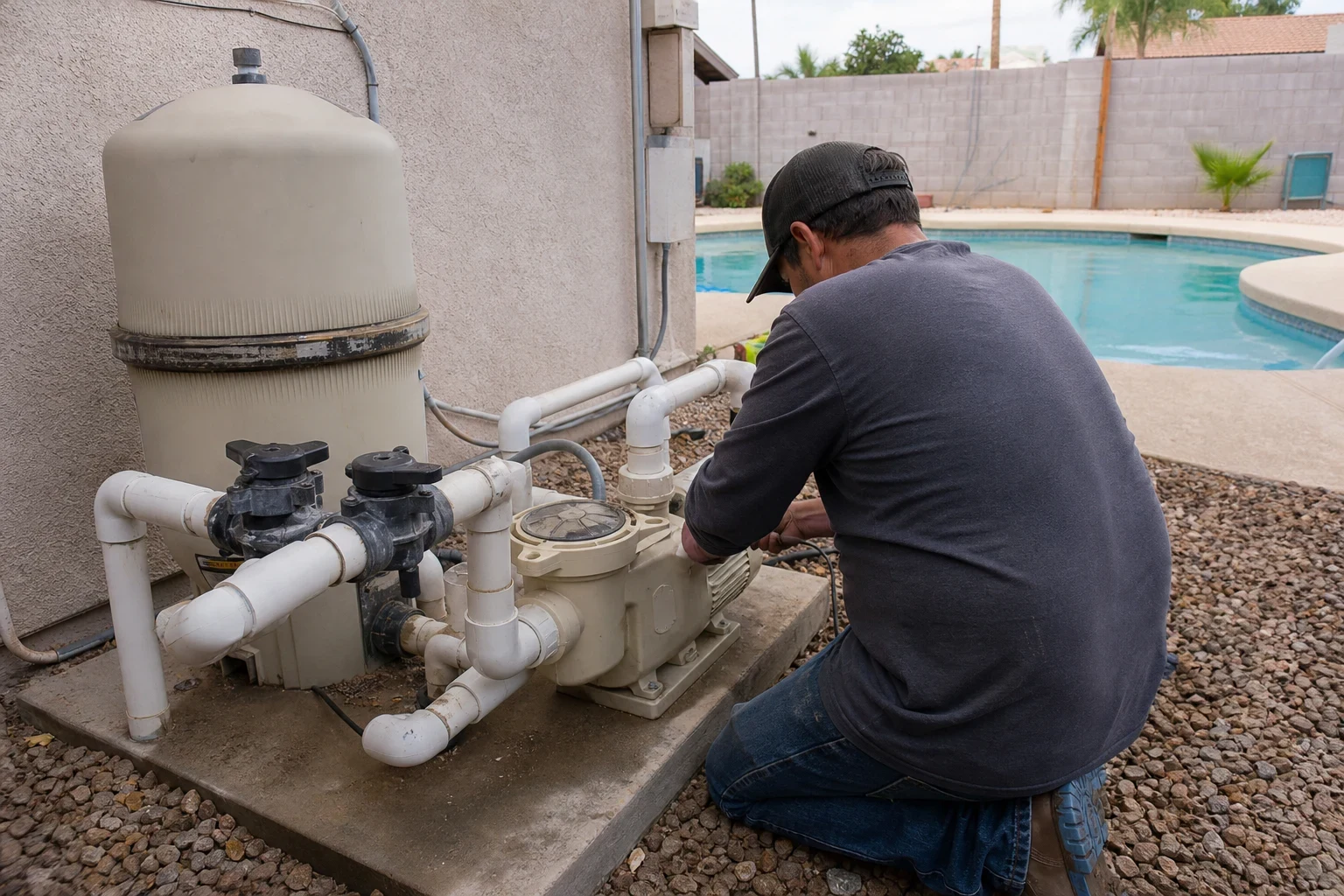
Repairs you can see, not just take our word for
Most pool problems start at the equipment pad. A worn shaft seal, a cracked filter manifold or a sticky valve can turn a clean pool cloudy in a few days. Our job is to trace the symptom back to the part that failed and fix that part, not swap out everything nearby.
We photograph what we find before we touch anything, then again after the repair. You see the corroded terminal or the split O-ring yourself, so you know why we're recommending the fix. If a repair isn't worth it on older equipment, we'll say so and explain your options, including our equipment installation service.
What our pool repair covers
- Pumps and motors
- We handle motors that won't start, trip the breaker or scream on startup, plus worn bearings, failed capacitors and shaft seals that drip under the pump. We also replace cracked lids and the O-rings that let air into the system.
- Filters and valves
- Broken laterals in sand filters, torn grids in DE filters, cracked tank bodies and leaking multiport valves. We also fix stuck diverter valves that send water to the wrong place.
- Pad plumbing
- Sun-brittle PVC, cracked fittings and loose unions at the equipment pad. We cut out the damaged section and replumb it cleanly so it holds pressure.
- Heaters and controls
- Heaters that won't fire or shut down early, and timers or automation that stopped running the pump on schedule. Hard water scale inside a heater is a common cause, and we'll show you if that's what's going on.
- Pool lights
- Lights that flicker, stay dark or fill with water. We check the fixture, the gasket and the bulb and tell you whether it can be repaired or needs a new light.
Signs your pool needs a repair visit
The pump is loud or won't prime
Grinding or screeching usually points to worn bearings. A pump that runs but won't catch water often has an air leak at the lid or a suction fitting.
Water under the equipment
A puddle beneath the pump is usually a failing shaft seal. Caught early, it's a small repair. Left alone, water can reach the motor and ruin it.
Pressure that won't settle
If the filter gauge stays high right after a cleaning, or drops near zero, something is blocked or broken inside. We open it up and show you what's in there.
Sand or debris blowing back into the pool
Sand on the pool floor after the pump runs is a classic sign of a broken lateral in a sand filter.
Breakers tripping
A motor that keeps tripping its breaker in the heat of an Arizona summer is struggling. We test it to find out whether it's the capacitor, the wiring or the motor itself.
How a repair visit works
- 1
Tell us what you're seeing
Give us a call and describe the noise, the puddle or the error light. We'll ask a few questions and set a time to come out for your free quote.
- 2
Diagnosis on site
At your home, we test the equipment, check pressure and wiring, and photograph each problem we find. You don't need to be there if we can reach the pad, and we'll walk you through what we found afterward.
- 3
A written estimate first
You get the parts and labor written out line by line, plus our honest take on repair versus replacement. Nothing gets done until you approve it.
- 4
The repair and a test run
We make the repair, then run the system and watch pressure, flow and any leaks at the fittings. If a part has to be ordered, we tell you how long it should take and whether the pool can keep running in the meantime.
- 5
A look at the finished work and cleanup
We show you the finished repair, and we clear away old parts and packaging from the pad.
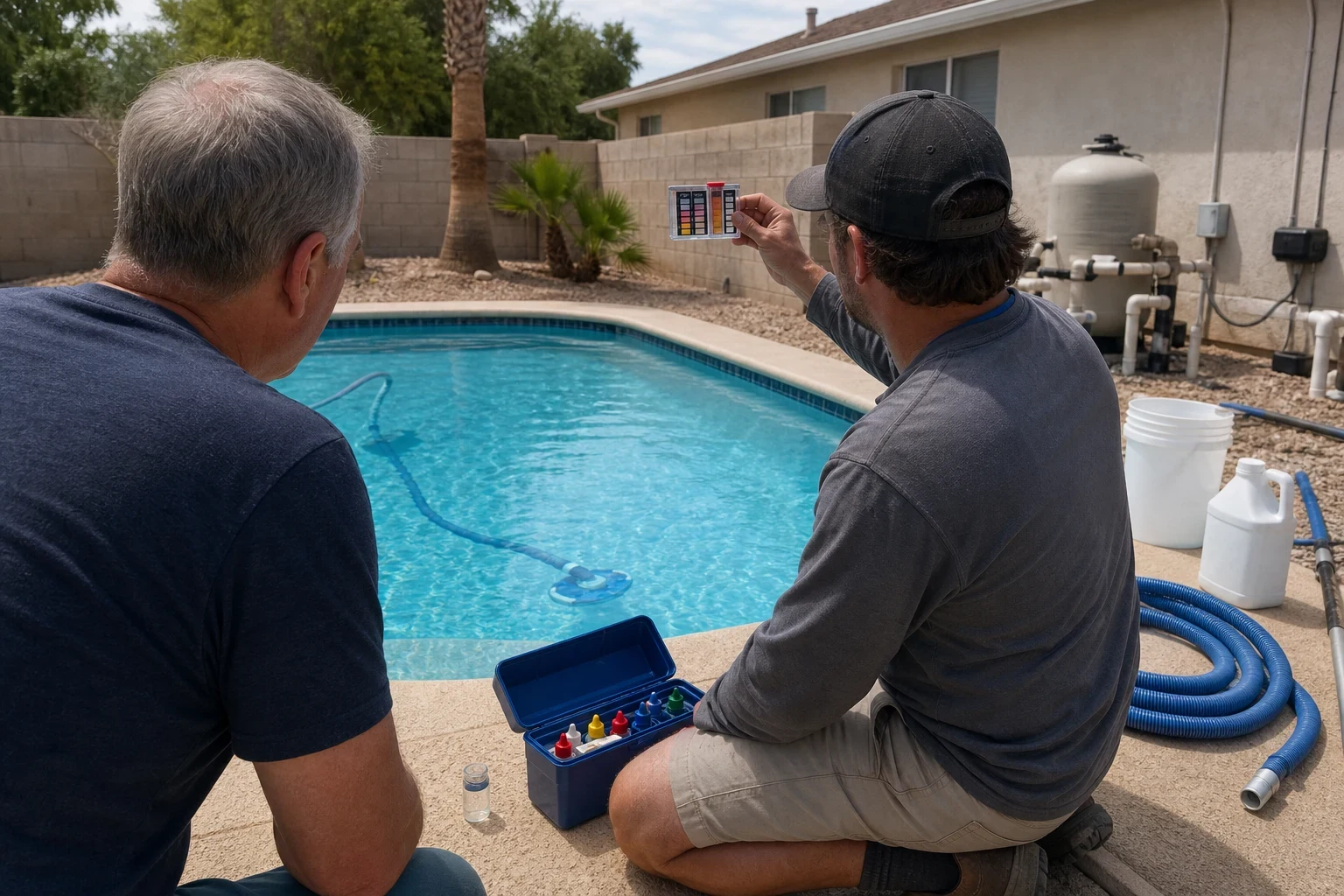
What affects the cost of a pool repair
Most repairs come down to the part that failed and how much time it takes to reach it. We don't quote over the phone without seeing the equipment, because a loud pump can mean a cheap capacitor or a worn-out motor. After the inspection you get one written number for the work you approve.
- The part itself
- A capacitor or O-ring costs far less than a motor, a heater component or a new filter tank. Variable-speed pump parts usually cost more than single-speed ones.
- Age and brand of the equipment
- Parts for older or discontinued models can be harder to find. Sometimes the cost of tracking them down makes replacement the smarter choice.
- How far the damage spread
- A seal that dripped for months may have rusted the motor bearings too. We'll show you exactly what was affected.
- Access and plumbing changes
- Tight pads, buried lines or plumbing that has to be rerouted to fit a new part add labor time.
Pool repair questions
Something not covered here? (520) 645-2946
Should I repair my pump or replace it?
It depends on the age of the pump and which part failed. A new seal or capacitor on a fairly young pump is usually worth doing. If the motor is burned out on an older single-speed unit, replacing it may save you money over time, and we'll explain why with the numbers in front of you.
Can you fix it on the first visit?
Often we can, when the problem is a common part like a seal, O-ring or capacitor. Larger or model-specific parts may need to be ordered. Either way, we tell you before we leave what happens next and when.
Can I still use the pool while I wait for a part?
Sometimes. If the pump can run safely, we'll set it up to keep the water circulating. If it can't, we'll tell you how to keep the water in decent shape until the part arrives, and our green to clean recovery service is there if it turns.
Do I have to be home for the repair?
No, as long as we can reach the equipment pad and the breaker. We send you a before and after look at the work so you can see it without standing out in the sun with us.
How do I know you actually replaced the part?
You get photos of the failed part next to the new one installed. We can also leave the old part for you if you'd like to see it in person.
Let's find out what's wrong with your pool
Tell us what your equipment is doing and we'll set up a visit. You'll see the problem for yourself and get a written estimate before any work starts.