ServicesPool Drain and Refill
Pool Drain and Refill in Florence
When calcium, stabilizer and dissolved solids climb too high, no amount of chemicals will fix the water. We drain your pool safely, check the empty shell, refill it and balance the fresh water, and we photograph each stage so you see what we found.
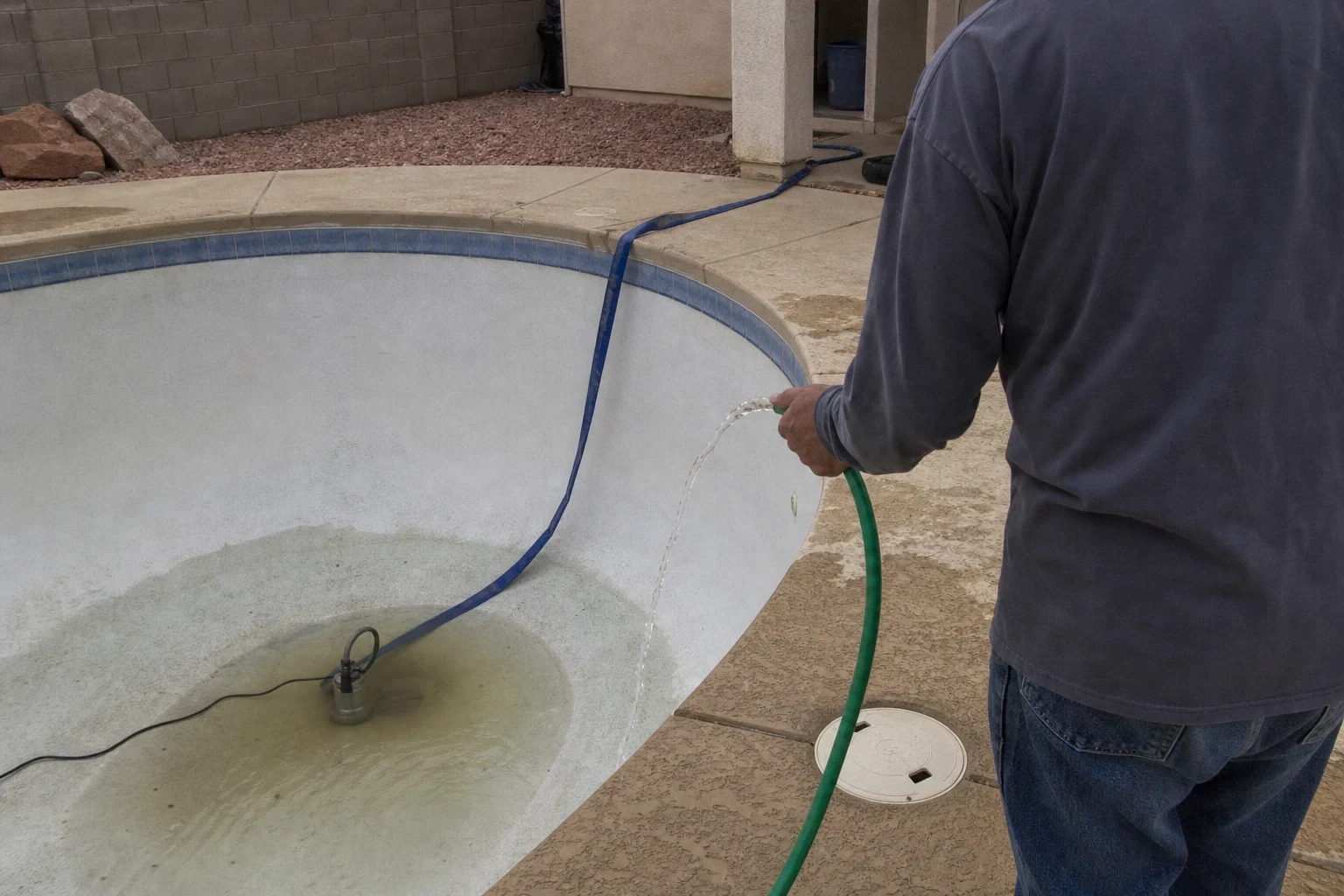
Starting over with fresh water
Pool water wears out. Every time water evaporates, the minerals stay behind. Stabilized chlorine tablets keep adding cyanuric acid, and that never leaves on its own. After a few seasons the water gets hard to balance, chlorine stops working the way it should, and scale keeps forming on the tile line.
A drain and refill resets all of that. It also gives us a rare look at the bare surface, the main drain, the lights and the fittings. We take photos of anything worth your attention, from small plaster cracks to loose tiles, and explain what each one means before anything else gets done.
In the Florence area the hot months push evaporation hard, so many pools here need fresh water every few years. We usually schedule this work for the cooler months, when an empty plaster shell is not baking in full summer sun.
What the job includes
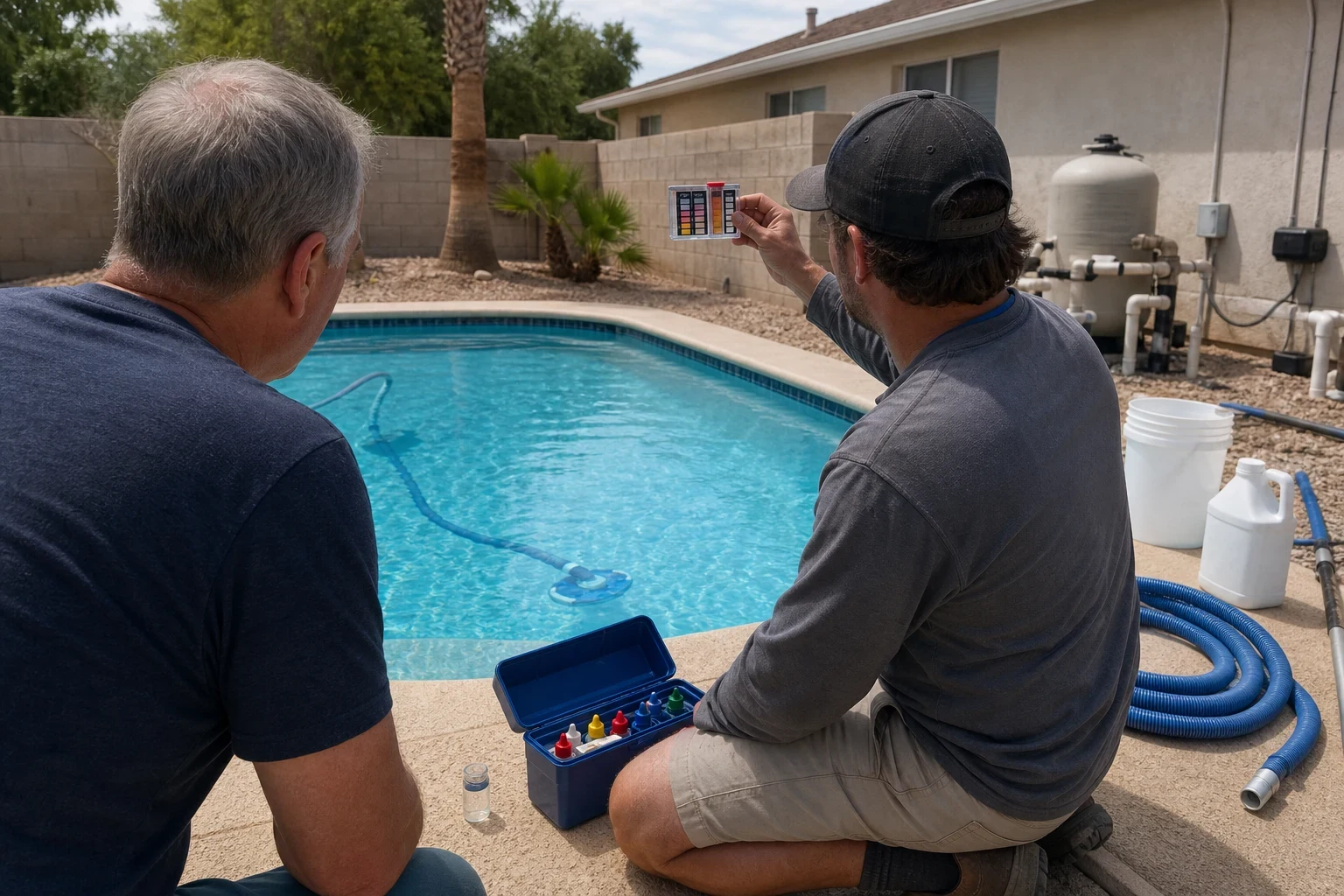
- A water test before we start
- We test calcium hardness, cyanuric acid and total dissolved solids first. If the numbers show you do not need a drain yet, we tell you that.
- Controlled draining
- We use a submersible pump and route the discharge where local rules allow, which in many cases means a sewer cleanout rather than the street. We confirm the rule for your address before the pump goes in.
- Shell protection
- On plaster pools we open the hydrostatic relief valve in the main drain once the water is down, so groundwater pressure cannot push on the empty shell. We keep the pool empty only as long as the work needs.
- Photo inspection of the empty pool
- While it is dry we look closely at the surface, tile line, light niches, returns and main drain covers. You get a clear record of the condition of your pool, good news included.
- Refill and start-up chemistry
- We refill, then balance pH, alkalinity, calcium and stabilizer for the fresh water. Your equipment goes back on only once the water is ready for it.
Signs your pool needs fresh water
Chlorine seems to stop working
If you keep adding chlorine and still fight cloudy water or algae, stabilizer is often the cause. Above a certain level, cyanuric acid ties up chlorine so it cannot sanitize.
White crust that keeps coming back
Scale on the tile line and water features returns quickly when calcium hardness is very high. Cleaning helps for a while, but the source is the water.
Water that feels heavy or looks dull
High dissolved solids can leave the water flat and hazy even with a clean filter.
Readings that will not hold
pH drifts, alkalinity swings and balancing becomes a weekly chore.
You are planning surface work
An acid wash or calcium removal and tile cleaning is done best on an empty pool, so pairing it with a drain and refill saves a second round of draining.
How a drain and refill day goes
- 1
Test and plan
We test the water, look over the pool and talk through timing. You get the plan and the reasons behind it before we set a date.
- 2
Drain and protect
We turn off the pump and heater, set our pump, and drain at a steady rate. Once the water is low we take care of the hydrostatic valve and begin the inspection.
- 3
Inspect and clean
With the shell empty we clear out debris, check the surface and fittings, and note anything that needs attention. If you added an acid wash or tile cleaning, it happens now.
- 4
Refill
We start the refill and keep the hose end protected so it does not mark the floor. A full pool takes a good while to fill, so plan on the water running into the next day.
- 5
Balance and hand back
We restart your equipment, balance the new water and share the final photos and readings with you.
What affects the price
Every pool is a little different, so we price the job after we know the size and the setup. We walk you through each part of the quote by phone, and nothing gets added without your okay.
- Pool size and depth
- More gallons means more pump time and more start-up chemicals for the new water.
- Discharge route
- Distance from the pool to an approved drain point and how easy that path is to reach change the setup time.
- Surface condition
- Heavy scale or stains may call for an acid wash or tile cleaning while the pool is empty. That is a separate choice, and we show you photos before you decide.
- Start-up chemistry
- Fill water varies, and some batches need more calcium, stabilizer or pH adjustment than others to get balanced.
Drain and refill questions
Something not covered here? (520) 645-2946
How often should a pool here be drained?
For many pools in this desert climate, every two to three years is typical, but your water test decides it. Pools on tablet chlorine often build stabilizer faster. We test first and only recommend a drain when the numbers call for it.
Can draining damage my pool?
It can if it is done carelessly, especially in hot weather or without relieving groundwater pressure. That is why we drain in milder months when we can, open the hydrostatic valve on plaster pools, and keep the shell empty only as long as the work requires.
Where does all that water go?
Rules on pool water discharge vary by town, and many prefer it go to a sewer cleanout. We check what applies at your home and set up the hose accordingly, so you are not left guessing.
Do I need to be home during the job?
Not the whole time. We need access to the yard, the equipment and a hose bib. Many owners are at work while we drain and simply go over what we found with us afterward.
Will the new water need a lot of chemicals?
Fresh fill water needs balancing and stabilizer to start. We handle that start-up before we hand the pool back. After that, routine care is much easier, and many owners move straight onto weekly pool cleaning to keep it that way.
Ready to find out if fresh water is the fix?
Tell us about your pool and what you have been seeing in the water. We will talk through whether a drain makes sense and what it would involve.