ServicesCalcium Removal and Tile Cleaning
Calcium Removal and Tile Cleaning in Florence
That chalky white line along your pool tile is calcium scale, and it doesn't scrub off with a brush. We remove it with methods matched to your tile, photograph the waterline before and after, and show you how to keep it from coming back.
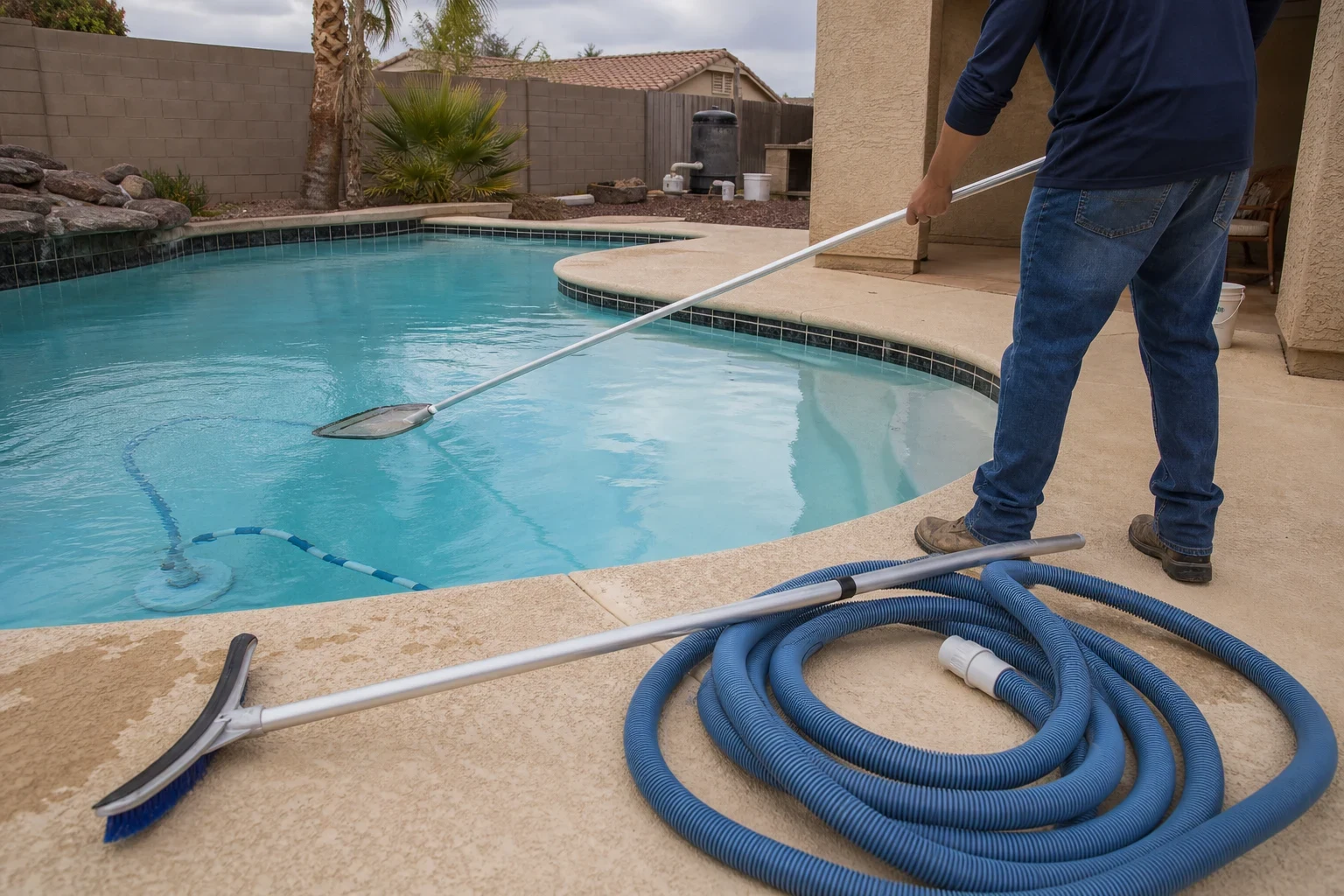
What calcium removal does for your pool
Our water is hard, and the sun pulls a lot of it out of your pool every week. When water evaporates, the minerals stay behind. They settle right at the waterline, where the tile is wet and dry by turns, and build into a crust that gets thicker each season.
Early scale is soft and white, mostly calcium carbonate. Left alone, some of it turns into calcium silicate, which is gray, glassy and much harder to lift. Both look rough, both trap dirt, and both make your whole pool look older than it is. Calcium removal and tile cleaning takes that band off and brings the tile back to its real color.
Before we touch anything, we take close-up photos of the scale and the tile under it. You see exactly what we found, what we did about it and how it looks when we leave.
What's included in the work
Waterline inspection and test patch
We check how thick the scale is, whether it's carbonate or silicate, and what your tile is made of. Then we clean a small test area so we know the method won't scratch or dull the surface.
Media blasting or hand removal
For most porcelain and stone tile we use low-pressure bead blasting, which knocks the scale off without harming the glaze. Glass tile and delicate finishes get a softer media or careful hand work with pumice and scale remover.
Grout and trim attention
Scale often hides cracked or missing grout. We clean along the grout lines and point out any spots that need repair, with pictures, so nothing gets missed.
Spillways and water features
Raised spas, sheer descents and rock waterfalls collect heavy scale where water runs over them. We include these in the quote when you want them cleaned.
Cleanup and water check
We vacuum the blasting media out of the pool, rinse the deck and test your water before we leave. If the chemistry is pushing scale, we tell you plainly.
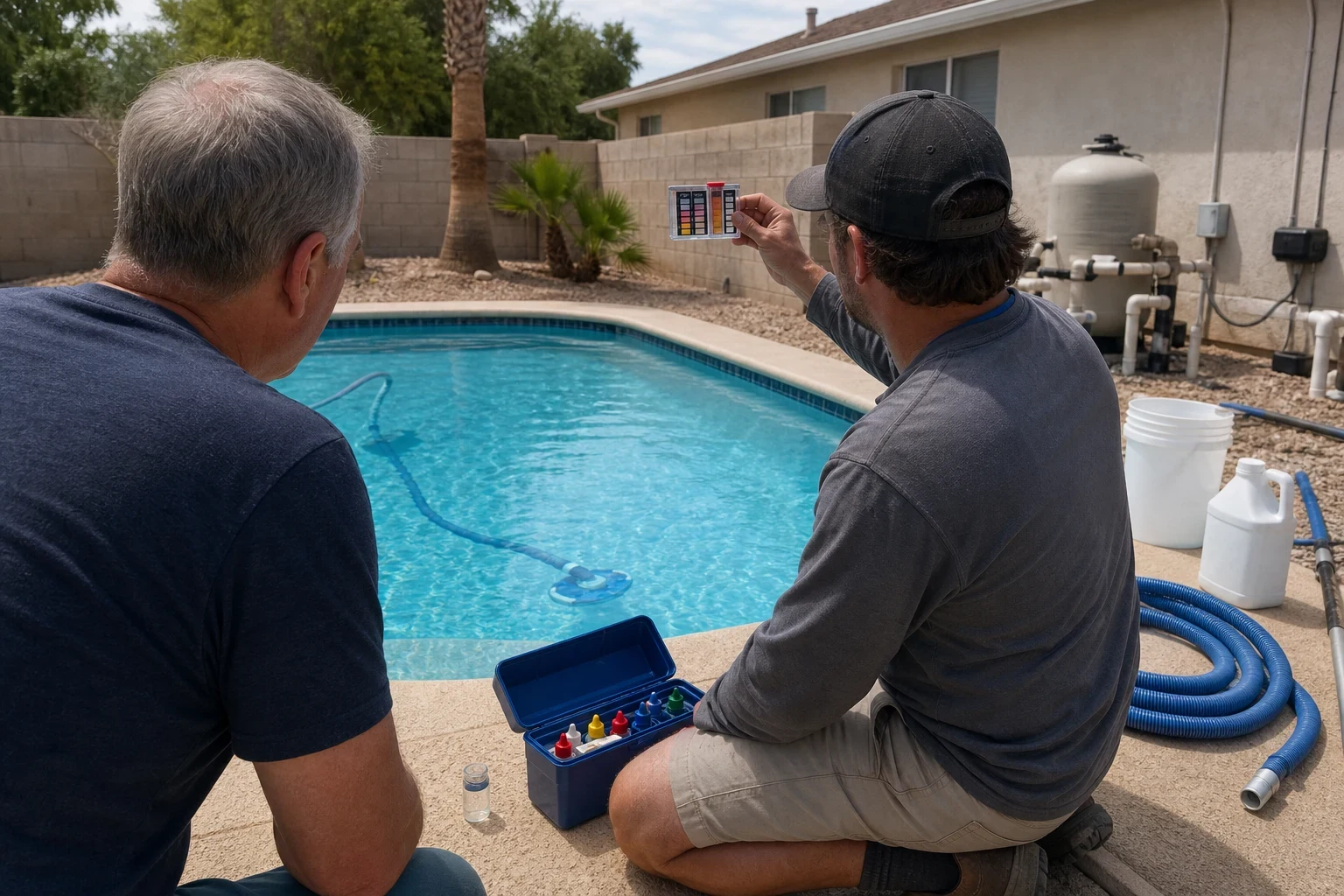
Signs your tile needs calcium removal
- A white or gray crust at the waterline
- If you can feel a gritty ridge when you run a finger along the tile, that's scale. Brushing won't take it off.
- Tile looks dull or faded
- Thin scale spreads across the whole face of the tile like a haze. Blue and green tile often looks washed out until it's cleaned.
- Crusty spots on water features
- White streaks down a waterfall or spa spillover mean minerals are drying there every day. They build fastest where water splashes and evaporates.
- Rough patches that snag swimsuits
- Hardened scale can be sharp. If kids are scraping hands or feet at the edge, it's time.
- The pool has never been treated
- Many pools in Florence and nearby towns have years of buildup that no one has removed. A first cleaning is usually the biggest visible change you can make.
How the job goes on the day
- 1
Free quote by phone
Tell us about your pool, your tile and how long the scale has been there. We'll set a time to look and give you a clear quote with no pressure.
- 2
Before photos and water lowering
We document the full waterline, then lower the water a few inches so we can reach the bottom edge of the scale band. Your pump and filter are set so nothing runs dry.
- 3
Removal and test patch
We start with a test area, then work our way around the pool. Most residential pools are done in a single visit.
- 4
Cleanup and refill
We vacuum out the media, rinse your deck and start refilling to your normal level. Your equipment is set back to its usual schedule.
- 5
After photos and advice
You get the after shots next to the before ones, plus a short note on water balance and how to slow new buildup.
What affects the cost
Every pool is different, so we quote after we see the tile. The price depends mostly on how much scale there is and how carefully it has to come off. We'll explain each part of the quote so you know what you're paying for.
- Length of the waterline
- A bigger pool or one with lots of curves and steps has more tile to clean.
- Type and thickness of scale
- Soft white carbonate comes off quickly. Thick gray silicate takes more passes and more time.
- Your tile
- Glass and hand-painted tile need gentler methods and slower work than standard porcelain.
- Water features and spa
- Waterfalls, spillovers and raised walls add surface area and often have the heaviest buildup.
- Access to the backyard
- Tight side yards or long hose runs can change how we set up the equipment.
Questions about calcium removal
- Will bead blasting scratch my tile?
- Not when it's done at the right pressure with the right media. We always clean a test patch first and look at it closely. If your tile is glass or has a delicate finish, we switch to a softer method or work by hand.
- Do you need to drain my pool?
- No. We only lower the water a few inches so we can reach the bottom of the scale band, then refill it. A full drain is a separate job, covered on our pool drain and refill page, and only makes sense when the water itself is worn out.
- How long will the tile stay clean?
- That depends on your water balance and how much evaporation and topping off your pool sees. Keeping calcium hardness and pH in range slows new scale a lot. Our weekly pool cleaning service includes regular tile brushing and chemistry checks that help keep it away.
- Is this the same as an acid wash?
- No. Calcium removal focuses on the tile band and water features. An acid wash treats stained or dull plaster across the whole pool and requires draining it. We can tell you which one your pool actually needs.
- Can I swim the same day?
- Usually yes, once the water is back to its normal level and we've checked the chemistry. We'll let you know before we leave.
See your tile clean again
Give us a call to describe the scale you're seeing. We'll set up a visit, quote the job for free and show you the before and after when it's done.